In the intensely competitive arena of contemporary professional oversteer competition, victory is far more than solely a product of brute torque or driver bravado. Conversely, it has evolved into a intricate engineering challenge that necessitates a painstaking marriage of picking a inherently capable car, outfitting it with the most precise performance parts, and, most importantly, understanding its live characteristics on the track through advanced suspension tuning applications. This definitive handbook acts as your blueprint starting from the very first idea of a drift build through to the final engineering-refined tweaks that turn a strong car into a consistent champion. We will examine in detail the methodical process of chassis dynamics adjustment, illustrating how a modern vehicle dynamics tool like GripDial eliminates guesswork and provides unparalleled insight into your car's real-world dynamics.
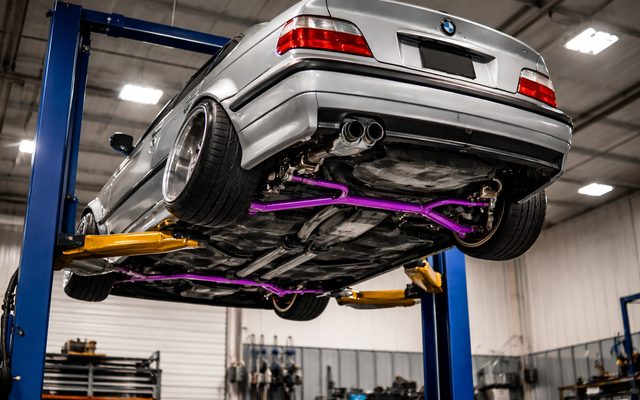
The bedrock of any exceptional drift machine is, indisputably, the chassis itself. Certain vehicles have achieved legendary reputation within the international drifting scene due to their inherent balance, strong build quality, and the immense ecosystem of specialist support available. Choosing the correct car is the first and most crucial decision a builder will make. To illustrate, the BMW's E36 3 Series is commonly accepted as among the greatest all-around drift cars of all time. Its almost ideal balanced front-to-rear weight, combined with a driven rear axle setup and robust six-cylinder engines, establishes a car that is simultaneously easy to handle for novices and highly capable in the possession of a pro driver. The evolution of this philosophy, the BMW E46 platform, improves on these attributes with a increasingly sophisticated frame, increased track for enhanced high-speed stability, and even more turning capability as standard from the factory. A distinct dominant contender in the pro scene is the C6 generation Corvette.
This muscle-derived track weapon offers a particular set of strengths to the sideways sport, featuring a light aluminum chassis, a rear-mounted gearbox and differential unit that contributes to an perfect weight distribution, and the tremendous low-end power of a big LS V8 motor. This fusion makes it an utter force on track, designed of starting and holding continuous angles with relatively minimal application of power. For those seeking outstanding performance per dollar, the Nissan 350Z rises above as a excellent candidate. It arrives from the manufacturer with a rigid chassis, a decent factory locking differential, and the smooth V6 motor that provides sufficient horsepower and torque for practicing and advancing in the sport. Its newer version, the 370Z model, brings more advancements in structural rigidity, suspension design, and overall motor output, establishing its place as a common pick among professional drivers. Further historic platforms that deserve attention are the agile unique Mazda FC RX-7, the ubiquitous Nissan S13 240SX, the torque-rich Ford SN95, the modern BMW E90, and the compact yet surprisingly playful and teachable Mazda Miata. Each of these cars gives a unique palette of attributes, complexities, and capabilities, but they all share the core ingredients required to become a serious drift car.
However, choosing the optimal chassis is only the beginning. To release the complete potential of any of these machines, significant upgrades to the steering geometry and suspension systems are completely essential. This is where the domain of precision tuning hardware comes into sharp view. The one most game-changing improvement for a dedicated drift machine is the fitting of a high-performance steering angle kit. These advanced assemblies, for example those developed by performance brands like SLR Speed, are engineered to significantly enhance the chassis's possible lock-to-lock rotation. A standard production vehicle is extremely limited in how far its front wheels can pivot, a engineering compromise for on-road driving. In sliding, conversely, extreme steering input is frequently required to catch and maintain a drift. An angle kit substitutes the stock hubs, rod ends, and potentially control arms with parts that allow the steered wheels to attain degrees of turn over 70 or even 80 degs, compared to a normal stock limit of around 40 to 50 degrees.
This tremendously greater lock offers the driver with significantly enhanced command during a slide, allowing it to be far more straightforward to begin a oversteer moment, maintain it through a long turn, and transition fluidly from one direction to the opposite. The contrast in handling is nothing short of revolutionary. Paired with a correctly chosen steering kit is the just as vital enhancement to the vehicle's spring and damper setup. Store-bought or even expensive street adjustable suspension are just not engineered for the unique and brutal demands of sliding. A drift-spec system of suspension units is crucial. These specialized coilovers have specific valving and spring rates that are designed for the rapid weight transfer that is inherent of drifting. When a driver begins a drift, the chassis's mass is transferred violently to the outside of the turn. Optimal drift-spec dampers handle this transfer in a predictable manner, permitting the vehicle to find its balance promptly and giving the operator precise feel through the wheel and seat. They also provide exact tuning of ride height, damping rate, and weight balance, which are all key parts of optimizing the car's handling to a given track or driving style. Together, a high-quality drift angle kit and a properly specified pair of drift-spec coilovers form the core physical base upon which all subsequent refinement is constructed.
Once the core parts is in place, the next vital phase in the build is the detailed adjustment of the vehicle's alignment. This is the world of car suspension tuning, a methodology that can appear daunting to the uninitiated but is, in practice, the secret to transforming a assembly of fast components into a cohesive and consistent vehicle. The most discussed parameter of alignment for sliding is undoubtedly negative camber. Wheel camber is the tilt of the rim compared to the upright line when viewed from the front-on of the car. If the top edge of the wheel is tilted towards the chassis, this is called inward tilt. In drifting, inward-leaning wheels on the steering tires is widely applied and is regarded as necessary. The reason is intrinsically linked to vehicle dynamics.
When a chassis is cornering at limit angles, the chassis rolls toward the external of the turn. This chassis roll causes the outside front wheel to lose its ideal footprint with the tarmac. By adding negative camber, the wheel is pre-leaned to account for this tilt. As the vehicle leans into the bend, the outside front tire becomes more upright against the asphalt, increasing its bite at the exact point when it is absolutely essential for directional command. Typically, front angles for a competition sliding vehicle fall between approximately -3 degrees to as extreme as -5 degrees or even more, contingent on the details of the car geometry, rubber type, and driver feel. The rear tires also utilize inward tilt, but the angles are usually less and more nuanced than the front. Overly aggressive camber at the rear can cause the vehicle to overly tail-happy and hard to manage on throttle input, as it diminishes the usable contact patch of the driving tires during straight-line power delivery. Therefore, rear angles are frequently in the ballpark of -1 degree to -3 degrees, finding a delicate balance between providing adequate lateral traction to help in entering and maintaining the drift while simultaneously keeping good traction for exiting the turn. Camber is just one element of the more complex tuning puzzle, which additionally includes car suspension tuning toe, self-centering steering, and steer correction adjustment.
Toe angle is the direction of the tires when looked at from above. Toe-in means the leading edges of the wheels are nearer together than the trailing edges, while outward toe means the converse. For drifting, a small amount of front toe-out is frequently run to drift suspension tuning guide sharpen the initial response steering feel, making the vehicle feel more agile and willing to start a oversteer moment. Rear axle toe is generally set to zero or a extremely slight amount of toe-in to encourage straight-line stability under throttle. Caster is the longitudinal or backwards angle of the suspension pivot when looked at from the lateral of the chassis. More positive caster enhances steering feel and high-speed confidence, and it also boosts negative camber increase during turning, which is extremely advantageous. Adjusting these parameters is a detailed dance where a modification to one parameter can and will influence the other settings. The traditional approach for tuning a chassis's suspension geometry for sliding has historically been a time-consuming endeavor of trial and error. A driver or engineering group would apply a adjustment based on a hunch, run the vehicle on track, depend on the driver's individual feel and feedback, and then apply another adjustment. This loop would repeat again and again until the chassis felt "good" or the scheduled testing session ended. This approach is not just exceptionally slow in terms of hours and resources, but it is additionally deeply flawed.
Pilot feel is a infamously inconsistent data source, colored by countless factors such as tiredness, evolving track grip levels, ambient heat, and just the mindset of the driver on that particular run. What feels "tail-happy" on one lap might feel "tight" on the subsequent run, resulting in confusing feedback and counterproductive tweaks. This long-standing challenge in car suspension tuning is precisely where state-of-the-art engineering tools has intervened to revolutionize the landscape.
The rise and integration of specialized suspension tuning applications has brought about a new age for tuning and refining professional drift machines. This new generation of systems, showcased by innovative solutions like GripDial, operate by actively measuring the real-time mechanical performance of the chassis as it is being driven on the track. In contrast to depending on driver feel, these systems collect measurable metrics on essential parameters such as shock absorber movement, corner velocities, lateral and longitudinal g-forces, steering angle, and accelerator and brake pedal position. This collected information flow is then processed by powerful software that can visualize and decode the data in a comprehensible manner. For the first time, drivers and builders can observe exactly what the chassis is performing at every point of a slide. This ability transforms the whole chassis setup procedure. Consider the specific goal of optimizing the front camber for a particular car. Instead of applying a change from -3 degrees to -3.5 degrees and then running multiple passes to try and "feel" a difference, a suspension tuning tool can deliver instant and clear feedback. The application can indicate in a chart how the wheel's loading is acting during the most important moments of a angle: turn-in, holding the angle, and transition. It can reveal if the current angle is allowing the outside front tire to keep optimal contact or if the compound is over-stressed on its outer edge.
The tool can subsequently suggest fact-based advice for adjustment. Perhaps the telemetry shows that the outside front tire is even stressing its outer shoulder at -3.5 degrees of negative camber, indicating that even more inward lean, say -4 degrees, might be beneficial. On the other hand, the data might reveal that the tire is not coming up to temperature or that the inside edge is wearing excessively, which could indicate that there is too much negative camber and a small lessening back to -3.2 degrees would be better efficient. This standard of accuracy and actionable insight was completely unattainable in the era of pure mechanical setup.
The effect of using a advanced vehicle dynamics tool goes far beyond just optimizing camber. It becomes an essential suspension tuning guide that is tailored to your specific car. When fine-tuning the damping values on your suspension, instead of using vague tips or replicating another driver's settings, you can employ the telemetry to observe how the vehicle is behaving in relation to your tweaks. The tool can show the damper movement data over a lap, revealing if the shocks are handling the weight transfer properly or if they are causing the vehicle to bounce too much after a flick. It can aid in diagnosing problems like excessive compression or topping out, allowing you to introduce educated adjustments to spring preload, rebound/compression values, or ground clearance. This methodology translates just as well to the intricate process of corner balancing. In addition to camber angle, the software can give data into how adjustments to toe and caster are affecting the vehicle's stability during specific parts of a lap. For example, it can assist you to determine the optimal amount of front axle toe out for your particular steering setup and competition technique by analyzing the speed of initial response and the predictability of the vehicle at lock steering angle. This makes the system an extremely effective performance optimization handbook that is dynamically updated by the actual performance of your own car on the tarmac. It elevates the complete process from a subjective skill into a methodical optimization process.
Furthermore, the application of a tool like modern telemetry is not at all limited to professional tuners with vast budgets. For the club-level enthusiast, it acts as an powerful equalizer. It effectively offers the driver with the analysis of a full-time race engineer without requiring the corresponding cost. It speeds up the learning curve by giving definitive solutions to challenges that would otherwise take years of experience to answer. A tuner can see how their specific car behaves to different inputs, developing a more intuitive understanding of car control in the endeavor. It furthermore opens up high-level chassis dynamics principles, enabling every enthusiast with the desire to optimize their vehicle to achieve it in a systematic and productive way. This is especially valuable in a discipline like sliding, where setup knowledge has historically been a closely guarded advantage among professional drivers. Now, that knowledge can be in the toolkit of every dedicated enthusiast.
In the final analysis, the path to engineering and tuning the ideal championship-contending drift machine is a multi-stage mission that seamlessly combines time-honored mechanical wisdom with revolutionary digital technology. It commences with the strategic choice of a capable chassis, followed by the application of critical competition components like drift-spec angle modification systems and properly selected competition suspension units. The process then advances into the precision realm of car suspension tuning, where values like negative camber, toe setting, and caster are carefully adjusted to complement the vehicle's modified geometry and the driver's individual needs. Ultimately, and what really separates the modern approach from the old ways, is the use of a powerful vehicle dynamics tool. This system removes the guesswork and trial and error of only seat-of-the-pants suspension engineering adjustment by providing objective, real-time telemetry on how the car is truly performing. It functions as an indispensable engineering partner, a actionable drift suspension tuning guide, and a master chassis development system. As a complete package, this complete approach ensures that all aspect of the competition vehicle—from the pick of the car to the most minute click on the damper—is perfected for maximum success on the circuit. It signifies the full maturation of the sport of sliding, bridging raw pilot talent with data-informed chassis dynamics to build the perfect dominant machines possible.